
With the Dubai heat taking up a chunk of the year, we’re all familiar with hopping off the Metro only to realise your destination is still a long, sweaty walk away. For many commuters in Dubai, that final stretch between a station and home, work or their next stop is often the biggest reason they choose to drive instead. But now, the Roads and Transport Authority (RTA) comes bearing good news! The department plans to change those walks in the humidity with a major citywide plan focused on making every part of your commute smoother, easier, and far more connected. Sound like a solution you want to know more about? Then don’t stop scrolling!
Love Being Driven Around In Silence? Dubai’s Driverless Taxis Are Here! And Here’s How You Can Book A Ride For Just AED 5!
Everything To Know About The Five-Year Plan Set To Improve Everyday Commute
The Roads and Transport Authority (RTA) has approved a five-year strategy that will expand Dubai’s soft mobility network through 2030. This is designed to make commuting easier for people who don’t rely on private cars. The plan will connect 25 additional residential communities while improving access around 63 public transport stations across the city.
The goal is to create seamless first- and last-mile connections using walking paths, cycling tracks, e-scooter facilities and shared mobility services. According to senior officials, the project supports Dubai’s long-term vision of creating a more integrated and sustainable transport network. At the same time, they also want to enhance residents’ quality of life and support the Dubai 2040 Urban Master Plan.
Public Transport Will Soon Be The Easier Option
The latest initiative reflects how urban transport is evolving. Rather than focusing solely on getting people from station to station, the emphasis is now on ensuring commuters can comfortably complete every stage of their journey. Senior officials explained that soft mobility has become an essential part of Dubai’s future transport ecosystem.
By improving connections between different modes of transport, the city hopes to encourage more people to leave their cars at home and opt for public transport. The long-term aim is to create a transport system that’s more convenient, sustainable and better connected for both residents and visitors.
More Walking Paths, Cycling Tracks & Shared Mobility
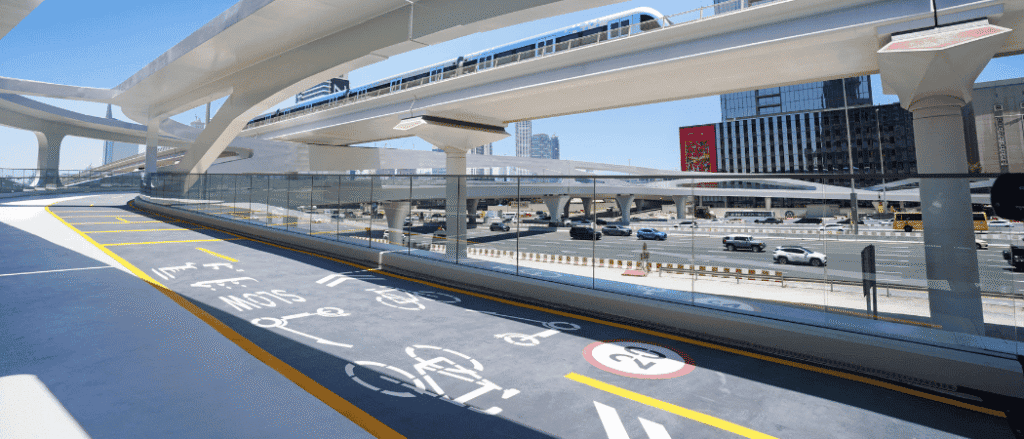
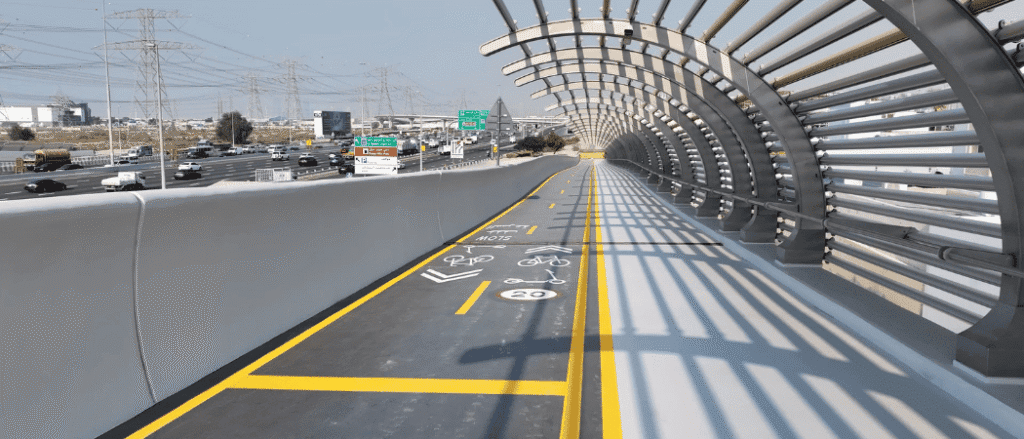
As part of the project, commuters can expect several new upgrades designed to make travelling easier and safer. Together, these improvements are designed to remove many of the small inconveniences that often discourage people from using public transport. These include:
- Dedicated walking and cycling tracks
- Safer pedestrian crossings
- Shaded walkways
- Bicycle parking facilities
- Mobility hubs
- Pick-up and drop-off zones
- Parking spaces for shared mobility services, including Careem Bike and e-scooters
- Improved accessibility for People of Determination
Soft Mobility Is Becoming More Popular
The growing demand for walking, cycling and shared mobility is one of the biggest reasons behind the expansion. Senior officials said the next phase will strengthen links between residential neighbourhoods, business districts and major destinations, allowing Metro stations and bus stops to function as fully integrated mobility hubs that offer commuters greater flexibility and convenience. In 2025:
- Pedestrian journeys reached 342 million, marking a 5% increase compared to the previous year.
- Cycling trips climbed to 57.3 million, rising by 23% year on year.
- E-scooter journeys also increased by nearly 23%, reaching 39.6 million trips.
25 More Communities Will Benefit By 2030
The five-year programme will bring soft mobility infrastructure to 25 more residential communities, increasing the total number of connected neighbourhoods to 34 by 2030. Work has already started in:
- Dubai Marina
- Al Murar
- Naif
- Al Rigga
- Al Muraqqabat
At the same time, the Roads and Transport Authority (RTA) will upgrade the areas surrounding 63 public transport stations, making them easier to access for pedestrians, cyclists and users of shared mobility services. The Authority has already completed similar improvements in nine residential communities. These include Al Karama, Al Barsha, Al Qusais and Abu Hail, along with upgrades around 37 Metro stations featuring pedestrian pathways, cycling routes, accessibility enhancements and mobility hubs.
Dubai’s Goal Is To Build One Connected Transport Network
The wider vision is to bring every mode of transport together into one connected system. Metro, buses, trams, marine transport, taxis and shared mobility services will all work together to make moving around Dubai simpler than ever. By making those first and last few kilometres quicker, safer and more convenient, the Roads and Transport Authority (RTA) hopes to boost public transport use, reduce traffic congestion and improve the daily commute for residents across the Emirate.
Soft Mobility By The Numbers
- 25 new residential communities will receive soft mobility infrastructure by 2030
- 34 total communities will be connected by 2030
- 63 Metro and bus stations will receive first- and last-mile upgrades
- 342 million pedestrian journeys were recorded in 2025
- Pedestrian usage increased by 5% year on year
- 57.3 million cycling trips were recorded in 2025
- Cycling increased by 23% compared to 2024
- 39.6 million e-scooter trips were recorded in 2025
- E-scooter journeys rose by nearly 23%
- Soft mobility works are currently underway in Dubai Marina, Al Murar, Naif, Al Rigga and Al Muraqqabat
- Upgrades have already been completed across nine residential communities and around 37 Metro stations
Dubai is clearly doubling down on making life without a car much more practical, and if these upgrades roll out as planned, getting from the station to your final destination could soon become the easiest part of your commute. As always don’t forget to keep reading Gulf Buzz for more updates on everything happening across the UAE.
Good News For All Drivers Who Hate The Traffic! These 7 Major RTA Projects Are Set To Improve Dubai’s Traffic