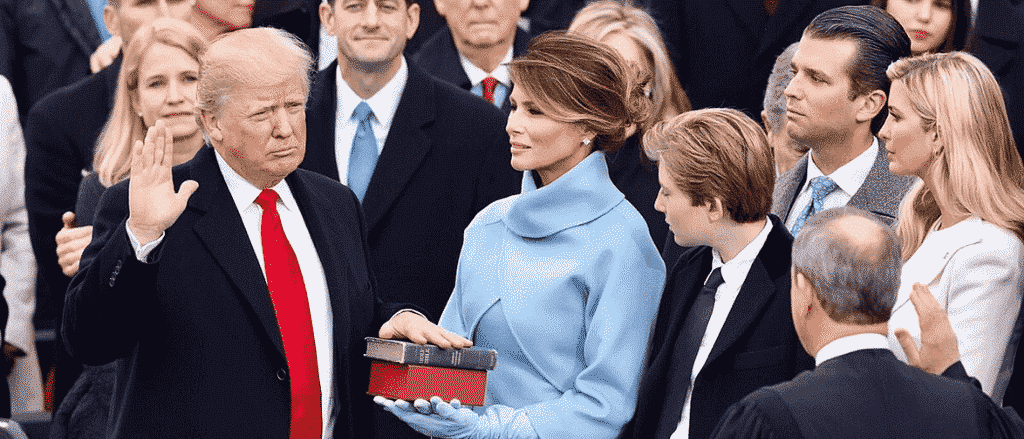

As Donald Trump gears up for his second term as President, one question is dominating the conversation: Will there be a travel ban on Day One of his inauguration? Let’s explore the possibilities and what they could mean for travelers, students, and immigration policies.
During Trump’s first term, the Supreme Court of the United States (SCOTUS) upheld the third version of the travel ban in the case of Trump v. Hawaii, solidifying its legal basis. In a 5-4 decision in 2018, the Court ruled in favour of the ban, which had initially targeted several predominantly Muslim countries. The ruling established the legal precedent that a president has broad authority to restrict travel from certain countries based on national security concerns.
Given this SCOTUS ruling, a second Trump administration’s legal team could argue that reinstating the ban would fall within his executive powers. Trump has previously used executive orders to enact significant changes without needing consent from the Senate or House of Representatives, a tactic that makes it easier for him to implement such a policy quickly, particularly within the first 100 days of his second term.
Immigration attorneys are split on the issue of whether Trump will reinstate a travel ban, with some bracing for action and others predicting that Trump will not implement a second ban.
The Case For A Travel Ban
Trump’s campaign promises have reignited concerns about the potential return of another travel ban. Throughout his campaign, he vowed on multiple occasions to restore and expand the controversial measure from his first term. He has hinted at tightening borders with restrictions on countries like Iran, Libya, North Korea, Venezuela, and Syria, and even extending the list to include other countries.
Immigration lawyers are preparing for action, with some predicting that a travel ban could be reinstated immediately after the inauguration. “Given Trump’s rhetoric during his campaign, we expect swift implementation of stricter immigration policies and rules,” says Shai Zamanian, a U.S. licensed attorney based out of Dubai. The American Legal Center, a prominent immigration firm led by Zamanian, has begun advising clients on how to prepare for potential changes in U.S. immigration policies.
Meanwhile, Ivy League universities have already issued warnings to international students, advising them of potential travel disruptions. As one advisor from Cornell University noted, “Returning home before the inauguration might be the safest option.” This precaution reflects growing concerns that the incoming administration could quickly tighten border policies, potentially impacting students and travellers from affected countries.
Trump has made it clear that his intention is to make an immediate impact. This approach could involve reinstating a travel ban via executive order, a tool Trump has used before to bypass Congress and act swiftly. Given the stakes and his desire to make a strong first impression, there is little reason to doubt that he might pursue this strategy once again. But, it’s also important to note that with a Republican-majority House and Senate, Trump is unlikely to face much challenge from Congress.
Trump’s potential appointees for key positions within his administration also point to a renewed emphasis on restrictive immigration policies. Several of these figures were instrumental in upholding the original travel ban. One such potential appointee is Pam Bondi, former Attorney General of Florida, who has been nominated by President-elect Trump to serve as the U.S. Attorney General. In 2017, after the first version of the travel ban was introduced, Bondi, as the Attorney General of Florida at the time, supported Trump’s stance and filed amicus briefs in favour of it.
Another potential appointee who supports the return to restrictive immigration policies is Stephen Miller, a former Senior Advisor to President Trump. Miller was a key architect of the original travel ban and played a central role in shaping Trump’s immigration policies throughout his first term. Known for his hardline stance on immigration, Miller consistently advocated for policies aimed at limiting immigration from certain countries, arguing that they were necessary for national security. His potential return to a prominent role in the administration further signals a continued focus on restrictive immigration measures.
Some pundits have speculated that because Trump can no longer seek re-election, he will essentially be a lame-duck president during the second half of his presidency. As such, he has to make the first half of his second term more impactful and thus the first 100 days are crucial. With this in mind, Trump is likely to issue executive orders more aggressively in his early days in office, making policies such as a travel ban an immediate priority.
“Yes, it’s true that Trump will want to make the first 100 days of his second term impactful,” explains Zamanian, “But there is also an argument that because he has a Republican-majority Congress and conservative SCOTUS, he is not worried about being a lame duck president, and so he will take his time with implementing any drastic changes.”
The Counterpoint: Maybe Not This Time
Despite the rhetoric, not everyone is convinced that a travel ban will make a comeback. Tim Clark, president of Emirates, dismissed the idea, calling the previous bans “missteps.” He remains confident that the U.S. will not repeat those actions.
Legal advocates for immigration reform are also sceptical. David Cole from the ACLU, who led challenges against the original bans, says the judicial system and public opinion will prevent such a drastic policy from returning. “The courts and Congress won’t allow it,” he argues.
For now, immigration lawyers are urging clients to prepare for potential changes while remaining optimistic that the strictest measures of the past won’t return. Kate Kalmykov, an experienced U.S. immigration attorney and Co-Chair of the Global Immigration and Compliance Practice at Greenberg Traurig Law Firm, shares insights into what lies ahead.
“Individuals cannot be banned solely because they come from a Muslim-majority country or follow the Islamic faith,” Kalmykov explains, referencing the court decisions that struck down such broad measures. “Instead, we’re likely to see enhanced vetting processes for applicants from nations classified as state sponsors of terror. The focus will be on ensuring that those entering the U.S. pose no threat to national security. These requirements will likely evolve as conditions in these countries change.”
Kalmykov further elaborates on the anticipated policy shifts: “The Department of Homeland Security (DHS) and the Department of State (DOS) under Trump’s administration will prioritise identity verification, information sharing, and public security risk assessments in visa reviews. Countries that lack the capacity to provide robust identity data or fail to cooperate with these demands may see their citizens subjected to stricter scrutiny during the visa process, potentially leading to higher denial rates.”
What Happens Next?
As we approach inauguration day, the future of U.S. travel policies remains in limbo. While some expect a return of the travel ban, others believe the political and legal pushback will be too strong. Immigration experts are urging travellers to stay informed and ready for potential changes. To navigate the evolving U.S. immigration landscape under the Trump administration, The American Legal Center invites you to an insightful seminar on Sunday, January 26th, at the Address Sky View Hotel in Downtown Dubai. To register for the seminar, contact The American Legal Center at +971 52 446 6095 or simply click here to reserve your spot.