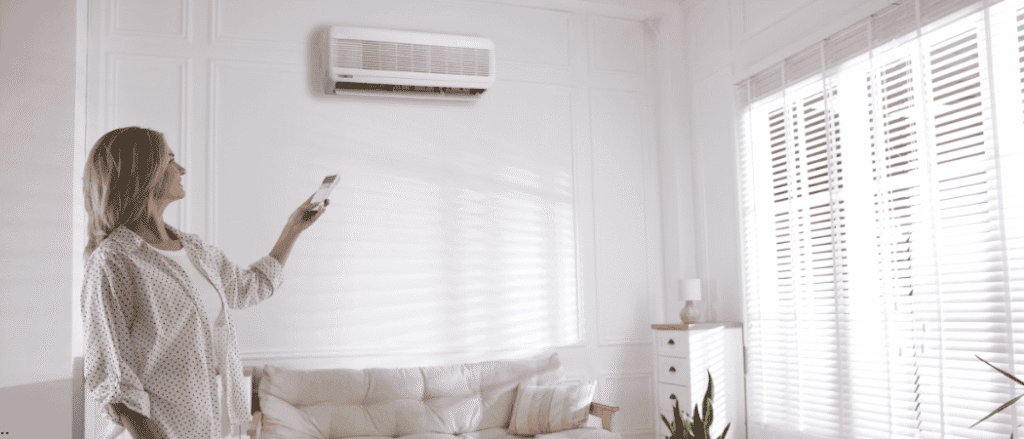

Heading off on holiday? You’ve probably triple-checked your passport, locked the doors and packed your bags. But there’s one last question that divides UAE residents every summer: should you leave your AC running while you’re away or switch it off completely? While turning it off sounds like an easy way to save on electricity, it could end up costing you much more in the long run. To avoid mould, humidity and ridiculous utility bills, here’s what experts recommend before you head to the airport.
If You’ve Been Shocked By Your DEWA Bill? Here’s How To Report High Consumption
Switching Your AC Off Isn’t Always The Best Idea – Here’s Why
According to the Dubai Electricity and Water Authority (DEWA), the most energy-efficient option is technically to switch your AC off when leaving for an extended holiday. However, there’s a catch. Without air conditioning, indoor temperatures and humidity can rise rapidly during the UAE’s summer months.
That extra moisture creates the perfect environment for mould and mildew. This also increases the risk of unpleasant odours, peeling paint, warped furniture and even damage to electrical appliances. So indirectly, the money saved on electricity could easily be outweighed by the cost of repairs once you return.
Humidity Can Cause More Damage Than You Think
Home maintenance specialists warn that humidity is one of the biggest threats to homes left unattended during summer. This is because when moisture builds up inside an apartment or villa, it can encourage mould growth on walls, ceilings, carpets, sofas and other upholstered furniture. In fact, the mould can also create health concerns once you move back in.
In some cases, residents have returned from short holidays to discover mould spreading throughout their homes. In more severe cases, after longer trips, the damage has been so extensive that furniture and household items have to be thrown away completely. This is why keeping the AC running helps regulate humidity and protects electronics, artwork, and indoor plants from extreme heat. It also maintains healthy airflow throughout the property.
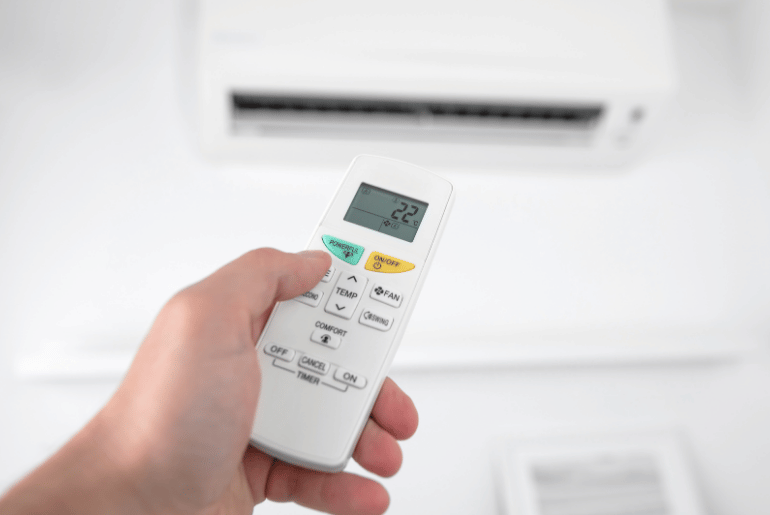
So, What’s The Best Temperature To Set Your AC At?
Rather than leaving your home ice-cold, experts recommend setting the thermostat before you leave. A setting between 26°C and 28°C strikes a good balance between preventing humidity build-up and reducing electricity consumption. DEWA also notes that increasing your thermostat by just 1°C can reduce electricity consumption by up to 5%.
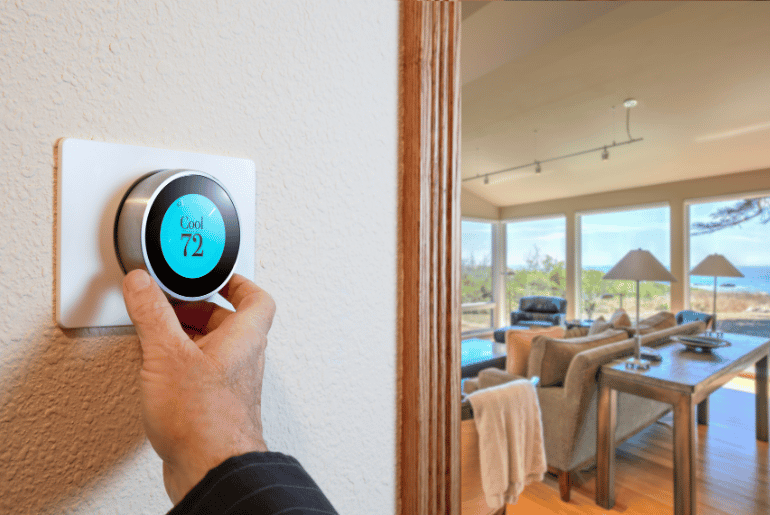
Now, if your home has a smart thermostat or programmable AC controls, then it’s even better for your home structure and expenses. These systems automatically adjust temperatures when needed, preventing unnecessary cooling while you’re away. Some experts also recommend using auto mode or fan-assisted settings. This allows the system to switch on only when temperatures rise beyond the set limit.
Simple Things You Should Do Before Leaving
Keeping your home protected isn’t just about the thermostat. Experts recommend these simple steps, which can make a noticeable difference in keeping your home fresh while reducing unnecessary energy use. Some of these steps include:
- Close curtains and blinds to reduce heat entering your home.
- Leave bedroom and kitchen doors open to improve airflow.
- Make sure your AC filters are clean before travelling.
- Check that your condensate drain is clear to prevent moisture build-up.
- Schedule regular AC servicing, especially before summer holidays.
- Use remote monitoring features, such as DEWA’s Away Mode, to keep track of your electricity usage while travelling.
Can Leaving Your AC On Actually Save Energy?
Surprisingly, yes! Experts explain that letting your home get extremely hot means your AC has to work much harder for several hours once you return. However, if you maintain a moderate indoor temperature during your holiday, your cooling system doesn’t need to operate at full capacity for an extended period afterwards. That being said, it doesn’t necessarily mean your overall electricity bill will be lower. It just means that by keeping the AC switched on you improve the AC’s efficient your AC’s efficiency and reduce unnecessary strain on the system.
Other Ways To Improve AC Efficiency
If you’re looking to cut electricity costs year-round, proper AC maintenance is just as important as choosing the right temperature. These small maintenance jobs can improve cooling performance while reducing energy consumption. DEWA recommends:
- Cleaning AC filters every two months, or monthly during summer.
- Replacing old units with newer 4-star or 5-star energy-efficient models where possible.
- Making sure outdoor units have enough shade and ventilation.
- Avoiding installation areas where multiple outdoor units blow hot air into one another.
- Sealing gaps around doors and windows to stop cool air from escaping.
Still Don’t Want To Leave Your AC Running – There’s Other Options!
If you’re uncomfortable leaving your air conditioner on throughout your trip, there’s an alternative. Ask a trusted neighbour, friend or family member to visit your home every few days and switch the AC on for around 30 minutes to an hour. It’s also ideal to have them open interior doors and cupboards during these visits, which can help improve air circulation. Some homeowners also use bathroom or kitchen exhaust fans to reduce humidity. However, their effectiveness depends on the property’s size, layout, and location.
Before you jet off, consider giving your AC settings one last thought. A slightly warmer home is far better than returning to mould-covered walls or damaged furniture. With the right temperature and a few smart precautions, you can strike the perfect balance between protecting your home and keeping energy costs under control. For more handy UAE life hacks, guides and the latest updates, keep reading Gulf Buzz!
There’s Still A Few More Months To Endure This Heat! Don’t Forget To Summer-Proof Your Home With These 15 Maintenance Tips