
Heads up folks, and I mean that literally because on September 7, UAE is about to witness one of the biggest astronomical events of the year! A total lunar eclipse will light up the night sky, lasting an incredible 1 hour and 22 minutes of full totality. That’s one of the longest in recent years. But here’s the best part. You’ll be able to enjoy all stages of the eclipse for nearly 5 and a half hours right here in the UAE. According to the Dubai Astronomy Group (DAG), this isn’t just any eclipse. Nearly 87% of the world’s population will get to see at least part of it, making it one of the most widely visible lunar events in history. I have all the stunning and important details you need to know about how to view this lunar phenomenon here in UAE.
Also read: The Next Meteor Shower UAE Can See Is Happening This Month!
Why Is It Called A Blood Moon?
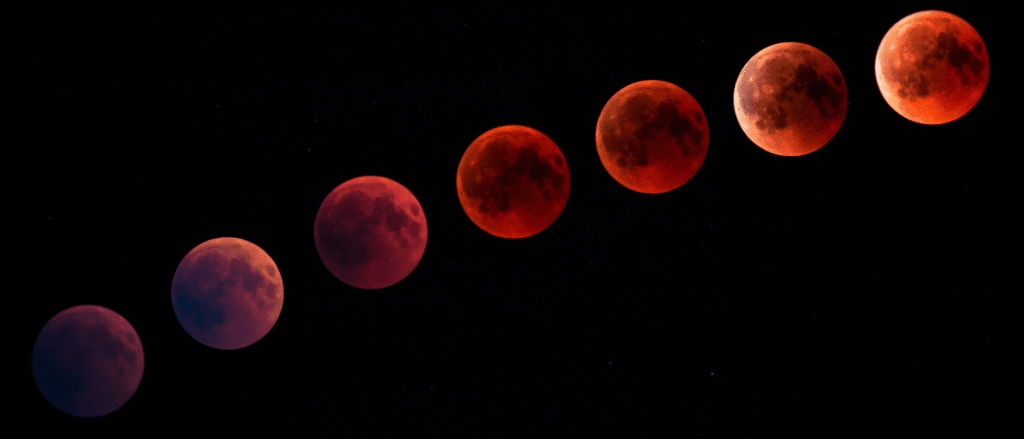
During the eclipse, the Earth slides directly between the Sun and the Moon, casting a shadow that turns the Moon a fiery red. This happens because sunlight bends through Earth’s atmosphere, scattering away blue light and allowing deep orange and red hues to reach the lunar surface. The result? A glowing red orb in the sky, AKA the iconic Blood Moon.
When To Watch In The UAE
Here’s the exact timeline for the eclipse across the UAE:
- 7:28pm – Penumbral eclipse begins
- 8:27pm – Partial eclipse begins
- 9:30pm – Total eclipse starts (Blood Moon time!)
- 10:12pm – Maximum eclipse
- 10:53pm – Total eclipse ends
- 11:56pm – Partial eclipse ends
- 12:55am – Penumbral eclipse ends
So yes — it’s going to be a late-night celestial show, stretching from Sunday evening into the early hours of Monday morning.
The Best Way To View & Capture The Beauty
The great news? Unlike solar eclipses, you don’t need any special glasses to view a lunar eclipse. Just step outside and look up. But if you want the ultimate experience, DAG suggests:
- Bring a telescope to see the Moon’s craters and the shadow moving across its surface.
- Use a tripod and long exposure settings if you’re into astrophotography. Even a smartphone attached to a telescope eyepiece can capture stunning shots.
- Head away from bright city lights for the clearest view. Deserts and mountain spots are perfect for this.
Breaking Down The Phases
If you’re new to eclipses, here’s a quick guide to what you’ll be seeing:
- Penumbral phase: The Moon enters Earth’s lighter shadow and dims slightly. Hard to notice at first.
- Partial phase: A dark “bite” appears on the Moon as it moves into the umbra.
- Totality: The big moment! The Moon turns shades of red, copper, or orange.
- Ending phases: The Moon slowly moves back out, reversing the process.
The Best Spots To View The Blood Moon Away From City Lights
Want to make the most of the night? Here are some of the best stargazing spots across the UAE where you can catch not only this eclipse but also events like the Perseid meteor shower on August 12:
- Al Quaa Milky Way Spot (Abu Dhabi) – The darkest place in the UAE, perfect for seeing the full night sky in all its glory.
- Shuweihat Island (Abu Dhabi) – A remote coastal gem for peaceful stargazing by the sea.
- Al Qudra (Dubai) – A closer option where you can escape city lights for a starry night.
- Wadi Shawka (Ras Al Khaimah) – Combine hiking, camping, and stargazing in the mountains.
- Al Sadeem Astronomy Centre (Abu Dhabi) – Join guided astronomy tours with smart telescopes for a learning experience.
Pro Tips For Driving To The Desert For Moon Gazing
Before you pack your telescope and snacks, remember:
- Go with friends and take at least two cars.
- Carry water, food, and warm clothes (yes, deserts get chilly at night!).
- Use red flashlights to protect night vision.
- Keep noise and bright lights to a minimum – it makes the experience better for everyone.
- And of course, don’t litter. Leave the desert just as beautiful as you found it.
Whether you’re setting up camp in the desert or joining a big community event, this rare 5-hour Blood Moon eclipse is something you’ll want to witness.