
So, summer is rolling. And everyone is off to Greece or Spain or Italy, looking sun-kissed and smug on Instagram while some of us sit here trying to decode our own Schengen visa rejection email like it’s a breakup letter from someone named “Embassy Processing Centre.” Turns out we’re not the only ones. Last year, UAE nationals lost a whopping AED 21.7 million on failed Schengen visa applications. That’s enough money to buy millions of airport sandwiches, or at least three Birkins, if you’re feeling dramatic (which I am). Worldwide, the cost of Schengen visa rejections in 2024? A heart-wrenching €145 million. Apparently, that’s up 11% from 2023. And yes, that is before we’ve even bought a single overpriced gelato.
Also read: UAE Residents, Your Schengen Visa Now Unlocks These 14 Non-Schengen Countries!
But Why Is The Schengen Visa Rejection Rate This High?
Okay, without further rubbing salt on your wounds, I’m cutting to the chase. Two things:
a. The visa fee went up. It used to be €80, but in thrilling turn of events halfway through the year, it jumped to €90. (Thanks for that.)
b. Everyone and their pupper wants to travel. Applications soared by 13.4%, from 10.3 million in 2023 to a whopping 11.7 million in 2024.
So, naturally, the EU made a tidy little fortune. With an average visa application fee of €85, they raked in nearly €996 million, which is 20.5% more than the €826 million they pocketed the previous year. Somewhere in Brussels, someone’s clinking glasses over that stat. Now, while we can’t bring the visa prices down or sedate our collective urge to pose next to European lampposts like we’re in a perfume ad, we can help you avoid setting fire to your money. Because nothing crashes a summer high quite like losing your dream holiday and AED 300, all for the privilege of being told “non merci.”
5 Things To Keep In Mind While Filling Your Schengen Application
So, UAE residents, before you surrender your passport, three passport-sized mugshots in which you look freshly arrested, and your hard-earned AED 300, here’s what you really need to know to avoid getting your Schengen visa rejected.
1. Forms Are Not Creative Writing Assignments
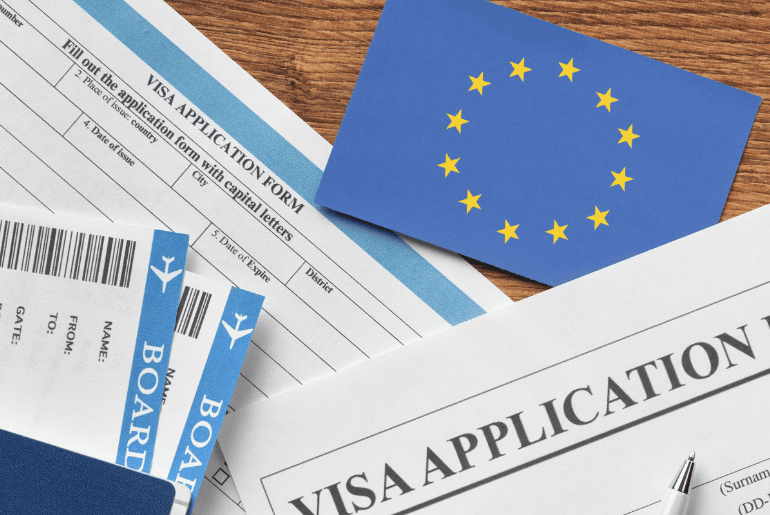
You must fill in the visa form exactly as per your travel documents. We’re talking exactly. Not how your friends call you, or the slightly fancy version you use on LinkedIn. If your passport says “Hania Bint Ali Al Yousuf,” don’t go writing “H. A. Yousuf” and expect the embassy to piece it together like a riddle. Even flipping your first and last names can lead to a Schengen visa being printed with the wrong info, or worse, rejected altogether. Yes, really. And writing “DOB: spring of ’93”? Not acceptable. Must be exact, cold, machine-readable data.
2. The Magical Schengen Visa Checklist
Turns out there is a thing called a visa application checklist, and you are meant to follow it. Apparently, each country has a different one. So just because your best friend applied for France last year with three bank statements and a picture of her cat doesn’t mean the same will work for Italy. Oh, also don’t use that generic list you found on Reddit. Fatal error.
Pro tip: Visit the VFS Global website. It has actual, official checklists. Updated ones. From real embassies. Who knew.
3. Bank Statements Must Be Dressed for the Occasion
Yes, we all know you need to show your finances. But what I didn’t know is that those bank statements need to be stamped. Officially. Not just downloaded from your app at 2am while panic-packing. Many applicants miss this, and unfortunately, it’s not a detail embassies overlook. Again, the exact requirement depends on the country. So check that checklist. Some want three months of statements. Others want six. Some want you to be solvent (tragic).
4. Last-Minute Applications = Recipe For Schengen Visa Rejection
Procrastination may be great for decluttering your wardrobe, but terrible for visa applications. Every country has different visa processing timelines, and during peak travel seasons (read: summer), delays are the norm. Don’t assume you’ll get your visa in 48 hours just because your cousin did a couple of years back. Applications are accepted up to 90 days before travel. Three whole months! You could apply, forget about it, and still have time to reapply if something goes pear-shaped. Also, many countries won’t even look at your application if your Emirates ID expires within six months of travel. And who among us is keeping track of that? No one. That’s who.
5. Sponsor Section: Not the Time for Improv
If your application involves a sponsor (someone hosting you or paying for your trip), do not, I repeat, DO NOT, wing this. Embassies are not impressed by vague names, half-baked details, or “Uncle Tom from Berlin”. So fill in the sponsor section accurately and include every single document required to back it up. Official names, bank statements, proof of residence, relationship documentation – the lot. It might seem like a lot of nitpicking, but when you’re staring at a rejection email, you’d give anything to go back and triple-check that form.
So, before you start planning outfits for Paris or rehearsing your “grazie” in front of the mirror, get your paperwork in order. The Schengen visa process is less about wanderlust and more about dotting your i’s, crossing your t’s. Because while Europe is full of surprises – romantic gondola rides, flaky croissants, suspiciously expensive bottled water – your visa status shouldn’t be one of them.
You may also like: These UAE Attractions Are Offering Wild Discounts This Summer!